The Glass Bead Game
Written on July 30, 2026 · by Nolan Mercer
★★★★☆
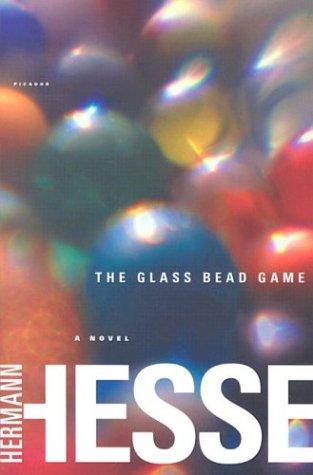
I want to be upfront that I picked this up expecting something closer to a puzzle book, given the title and the premise of an elite intellectual order built around a mysterious game, and that expectation actively worked against me for the first half. The game itself is never explained in mechanical terms, and by the end I still had no real conception of what the thing actually was. I think that’s the point, honestly. It’s described almost entirely through mood, some abstract synthesis of music, mathematics, and philosophy played out in symbols, and if you go in wanting rules the way I did, that’s going to frustrate you for a while.
Once I stopped waiting for the rulebook and started reading it as a novel about the tension between a life of pure intellectual withdrawal and a life spent actually engaged with the world, it opened up for me. Joseph Knecht’s arc, rising to the top of an institution built entirely around abstraction and then walking away from it, reads almost like Hesse arguing with an earlier version of himself, the same story he’s been telling since Demian, more or less: a man working out his relationship to himself, to the world, and to some higher power he’s beholden to. The setting changes. The shape doesn’t.
The posthumous writings section near the end, the poems and the three imagined “lives” Knecht supposedly wrote, is genuinely the strongest material in the book. That section takes up something like the last hundred and twenty pages, and it’s five-star material by any reckoning, which made me suspect I’d been missing something in everything before it. I nearly stalled out around page three hundred and I’m glad I pushed through, because the ending recontextualizes a lot of what dragged earlier.
It’s slow. It took me longer to get through than every other Hesse novel I’ve read combined, which tracks, since it’s roughly as long as all of them combined too. There’s a real question of whether the eleven years Hesse reportedly spent writing it shows up as depth or as a text that could have used some extensive editing.
Four stars, mostly on the strength of an ending that earns the slog.